
Welcome to North Coast Music Beat!
You'll find enticing reviews, unique interviews, amazing photos and an eye on new artists!
The Rascals
Felix Cavaliere Interview;
Playing Robins Theatre Friday
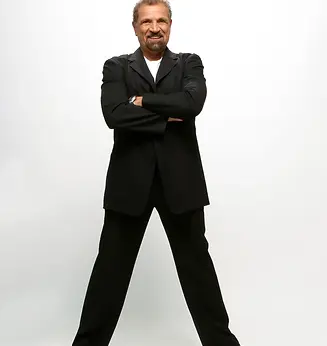
Felix Cavaliere and The Rascals will be performing this Friday at the Robins Theatre in Warren. We had a chance to chat with the Rock and Roll Hall of Famer to discuss his career, the Rock and Roll Hall of Fame and his upcoming appearance in Warren.
Greg Drugan: You are out celebrating 60 Years of The Rascals. What an incredible accomplishment. Did you ever think your career would last this long?
Felix Cavaliere: I didn’t even think about things like that. In those days, thirty was old! I see a lot of my peers that are still out there and I totally understand why, you know?
GD: The Rascals created some of the most enduring songs of the 1960s. When you look back on classics like “Good Lovin'”, “Groovin'” what do those songs mean to you today?
FC: When you look back at songs, it’s kind of like looking back on someone you used to date or a major event in your life. Those songs are like events in my life. I look back with a smile, I look back with happiness.
GD: When you hear those songs, you can’t help but put a smile on your face. At least I do when I hear them!
FC: That’s great! That’s perfect! That’s always what I tried to do. I figured there’s enough news stations.
GD: Your music blended rock, soul, R&B, and blue-eyed soul in a way that was groundbreaking at the time. How did those diverse influences help shape The Rascals' signature sound?
FC: It’s interesting. I live in Nashville, Tennessee right now. I’ve been here a long time and no one thinks I’m from here. I have an accent from where I grew up in New York and when we’d do songs, they’d come out with that kind of accent on it. In this case, it would be more of a soul accent.
GD: More than 50 years after their release, many of your songs still resonate with audiences. Why do you think The Rascals' music continues to connect with new generations of fans?
FC: I go back to those magic years of the ‘60s music. The music of The Beatles and The Kinks and The Stones, The Spoonful and The Byrds and The Beach Boys. There’s something about it that’s lasting. We were all a part of that generation and that’s good luck on our part. It’s also what we tried to reproduce at the concerts.
GD: Speaking of concerts, you guys are going to be playing here in Warren. When you're putting together a setlist today, how do you balance fan favorites with songs that you personally enjoy performing the most?
FC: That’s always a problem. I realize that people are coming to hear the hits that they know. We do those and we do songs that they know. Frankly, I enjoy playing them all.
GD: You've shared stages with some of the greatest artists in music history throughout your career. Are there any particular memories or collaborations that still stand out to you or maybe a tour that you did?
FC: A lot! I remember doing a show with Sly and the Family Stone, that was a lot of fun! I was at Madison Square Garden with Sam and Dave and Aretha (Franklin). We’ve been on the stage with a lot of great people. I’ve been on stage with Bruce Springsteen, Billy Joel. It’s just a wonderful career. I don’t know what else to say, I’ve had a blast.
GD: Looking at your song, "People Got to Be Free" that carried a powerful social message. What inspired the band to address issues of freedom and unity through its music?
FC: That particular song was a result of, well I was working for Robert Kennedy for his campaign. I was seeing a young lady who was present at the assassination out in Los Angeles. It just affected me. Anyone that’s involved in a presidential campaign, your pretty involved emotionally as well. I just said, I gotta write this song so people can know where we’re coming from.
GD: The music industry has changed dramatically since The Rascals first emerged. What differences stand out the most when comparing today's music world to the one you entered in the 1960s?
FC: As were speaking, AI is becoming more and more and more and more and more. (laughs)
GD: A little glitch.
FC: There’s two different answers to that question. One is on the business side and one is on the music side. I believe you asked the music side. The music is becoming more automated. It’s becoming more repetitious and less adventurous. There are some people that are really exploring but you don’t hear that on the radio or the streamers. You hear that on private stations or private collections. Music is getting more and more repetitive.
GD: What about the business side?
FC: Oh boy! Here’s my take on it, I may as well get it off my chest. After Woodstock, the corporations found out how much money could be made, at the time, from the Baby Boomers. They entered the fray. Any time corporations enter the picture where there’s art, there’s trouble. Because they try to recreate, in my opinion, what God does.
GD: And they want their cut as well. (laughs)
FC: And their cut is pretty big! (laughs) What they do is what they think is important, which is the business side. It is important, but it’s become more important than the music. If I come out with a new cereal, if I can’t advertise that, you’ll never know it’s there. So the money that’s invested plays a major role in what happens today. That’s the nicest way I can say it.
GD: Have you been able to keep you publishing over the years?
FC: Unfortunately, we did not to a degree. My ex-partner there, Eddie (Brigati) left the band everything just kinda went astray. We kept some of it, so we’re doing ok. It was a bad, bad move and I’m so sorry it happened.
GD: In the ‘80s Pat Benatar had the second video ever played on MTV with a cover of your song, “You Better Run.” What did you think of her cover and did that help you get some new fans?
FC: I don’t know if that helped us get new fans. I might have. I really enjoyed it because they were from Connecticut, which is where I lived for many years. I was really happy and proud and I felt she really did a great job.
GD: The Rascals were inducted into the Rock and Roll Hall of Fame in 1997. What did that recognition mean to you personally and professionally? Have you been to the museum recently?
FC: Oh yeah, not recently but we used to go all the time. We were inducted in Cleveland, rather than in New York. In those days, it was a lot more fun than it is now because it wasn’t a big television show. You could get to see people that you knew and hang out backstage a little bit. It was very different then but now it’s huge. It meant a lot to us then and it means a lot to us now.
GD: Since you are in the Rock and Roll Hall of Fame, you are a voting member. Is there someone from the ‘60s or your era that isn’t in the Rock and Roll Hall of Fame that you would like to see get in?
FC: That’s a great question. As you know, the nominating procedure is what determines who gets on the ballot. That’s the tricky part. I’m sure there’s quite a few people. The difference now a days is that they’ve expanded the rock and roll thing into a lot of different places. They’ve got country in there, they’ve got rap and hip hop. They’ve got Latin. It’s becoming instead of the Rock and Roll Hall of Fame, it’s becoming a music hall of fame. That’s what I believe.
GD: I agree with you. There’s a group from your era, Tommy James and the Shondells, I can’t believe that they’re not in.
FC: I can’t believe it, but you know why. He’s a good friend. You have to be nominated by a board. Fortunately, we’ve had some really good friends on the board. A major guy that did it for us was Steve Van Zant. He really pushed. We had Dion and Frankie Valli and Phil Spector. But Steven really pushed for us.
GD: Original guitarist Gene Cornish will be playing with you. What does it mean to have someone that has been with you since the early days to be touring with you today?
FC: It would be nice but unfortunately, I don’t think Gene is going to make these shows. The old clock on the wall is turning and it’s getting a little difficult for him. You don’t want to push and I’m sorry we didn’t announce it earlier. Gene’s pretty much retired from the stage now. The actually Rascal band only lasted five years, six years at the most. The band I’ve got now, we’ve been together for almost twenty years! Most of them are Nashville based and they grew up loving the music. We do the best we can to make people happy.
GD: You are going to be playing Robins Theatre on Friday. What can fans expect from your show?
FC: As I say, the ‘60s mentality was very different from the next century that we are in right now. People lived through the music. We didn’t have the iTunes or the Spotify or the Facebook. We communicated as a generation, through the music. I try to create an atmosphere where we sing together, we smile together, let’s remember together and people really, really take to that.
GD: I am really looking forward to the show. I’m going to get this posted and get the word out and I look forward to seeing you on Friday night!
FC: I look forward to seeing you on Friday night! I thank you for your help and I really appreciate it.
Make sure you check out The Rascals along with The Ides of March that features Jim Peterik, an original member of Survivor and writer of many hit songs!